


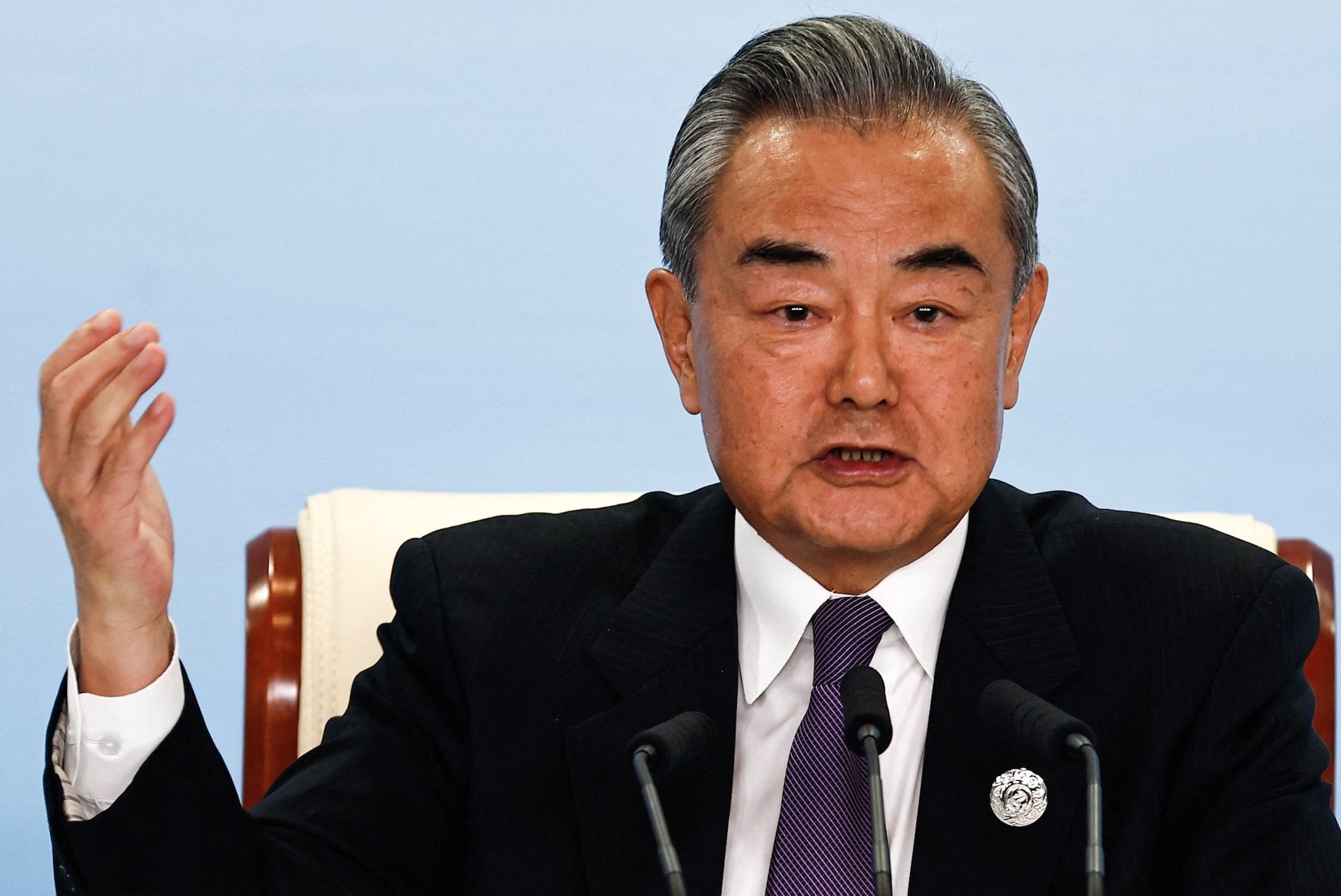
Beijing — China has named Zhai Jun, its Special Envoy on the Middle East, as the diplomat it will send to the region to push for an immediate ceasefire, as Beijing intensifies a diplomatic campaign that has already seen Foreign Minister Wang Yi hold urgent phone calls with counterparts from seven countries across both sides of the conflict sparked by Operation Epic Fury.
Chinese Foreign Ministry spokesperson Mao Ning confirmed on Thursday that Wang Yi had spoken in recent days with his counterparts from Russia, Iran, Oman, France, Israel, Saudi Arabia and the UAE. The breadth of those contacts, spanning both sides of the conflict and key mediating states, positions Beijing as the most active major power currently pursuing a diplomatic path out of the crisis.
The timing of Zhai Jun’s visit and the specific countries on his itinerary have not yet been confirmed, with the ministry saying details “will be released in due course.”
“The protraction and escalation of the conflict serves no one’s interest,” Mao said at a regular press briefing on Thursday. “China believes that war and force cannot solve issues once and for all, dialogue and negotiation are the right solutions, and political and diplomatic settlement of disputes and differences should be upheld.”
Beijing Tells Israel: Force Creates New Problems
China’s most direct engagement came in a call Wang Yi held with Israeli Foreign Minister Gideon Sa’ar on March 3 at Sa’ar’s request, marking the first known direct contact between Beijing and Jerusalem since the strikes began.
Wang told Sa’ar that China opposes the strikes launched by Israel and the US against Iran, pointing out that recent Iran-US negotiations had been making notable progress before being disrupted by the military assault.
“The use of force cannot truly solve problems. Instead, it will create new ones and leave severe aftereffects,” Wang said. “The real value of military might lies not on the battlefield, but in the prevention of war.”
Wang also called on Israel to take concrete measures to ensure the safety and security of Chinese nationals and institutions in the region, a reflection of Beijing’s parallel concern about the welfare of its own citizens caught in the conflict zone.
Iran Told China: Talks Were Making Progress When U.S. Struck
Iranian Foreign Minister Abbas Araghchi briefed Wang Yi directly in a separate call, stating that the US launched military action against Iran while Iran-US negotiations were still underway and had been producing genuine progress.
Araghchi said US actions violated international law and left Iran with no choice but to defend itself with full force.
China’s response was to express understanding of Iran’s position while urging all parties to step back from the brink. Wang told Araghchi that China supports Iran in defending its sovereignty and security, while also taking the legitimate concerns of neighbouring Gulf states seriously.
Iran told Beijing its forces would fully safeguard the security of Chinese personnel and institutions, a significant commitment given Iran’s sweeping drone and missile campaign struck seven countries on Thursday, hitting Dubai International Airport, a US consulate, and civilian infrastructure across the Gulf.
Oman: Talks Have Made ‘Unprecedented Progress’
China’s call with Omani Foreign Minister Sayyid Badr bin Hamad Al Busaidi added a critical dimension to Beijing’s diplomatic picture.
Oman, which served as the primary back-channel mediator between Iran and the US, told Wang Yi that the Iran-US talks had made “unprecedented progress” before Washington and Jerusalem abandoned those achievements and launched the war.
“If this war continues, it will lead to more casualties and property losses. All parties should work together to promote an early ceasefire and end the fighting,” Oman’s foreign minister said, according to a readout published by China’s foreign ministry.
Wang said China recognises the significant efforts Oman has made to maintain regional peace and called on all parties to return to the diplomatic track that Muscat had painstakingly constructed.
China Evacuates 3,000 Nationals From Iran
Alongside its diplomatic push, Beijing has been running a parallel operation to protect its own citizens. China evacuated approximately 3,000 nationals from Iran in the days following the outbreak of the conflict, according to the China-Global South Project, as Beijing condemned the US and Israeli strikes as a violation of international law.
The scale of the evacuation underlines the depth of China’s economic and human exposure to the conflict. Iran is one of China’s largest trading partners, and tens of thousands of Chinese nationals live and work across the region.
China’s Three-Point Position
Beijing’s official position, set out clearly in the foreign ministry’s March 3 press conference, rests on three demands: an immediate stop to military operations; an early return to dialogue and negotiation; and collective opposition to unilateral use of force in international relations.
“It is unacceptable for the US and Israel to launch attacks against Iran in the process of the ongoing Iran-US negotiations, still less to blatantly attack and kill the leader of a sovereign country and instigate government change,” Wang Yi said. “These actions have violated international law and basic norms of international relations.”
China has also indicated it will “stand firm for justice” at the UN Security Council, a significant signalgiven that Beijing holds a permanent seat and veto power on the Council, and the US has so far blocked any Security Council resolution on the conflict.
Where Diplomacy Stands
Whether Zhai Jun’s mission can gain traction will depend heavily on whether Washington and Tehran are prepared to pause hostilities at all. The White House has not ruled out the deployment of US ground troops in Iran. Kurdish fighters have already opened a ground offensive inside Iran along the Iraq-Iran border. Senior Iranian officials have vowed to strike America in the heart. Trump, in an interview with the Daily Mail, said the conflict could go on for another four weeks or more.
China brokered a landmark reconciliation between Saudi Arabia and Iran in 2023 and is betting that its relationships on both sides of the current divide give it unique leverage that no Western power currently possesses. Whether that leverage is enough with an IRGC commander warning of attacks that are “more intense and widespread” to come remains the central diplomatic question of the crisis.
This is a developing story. Updates will follow as more facts are confirmed.
