


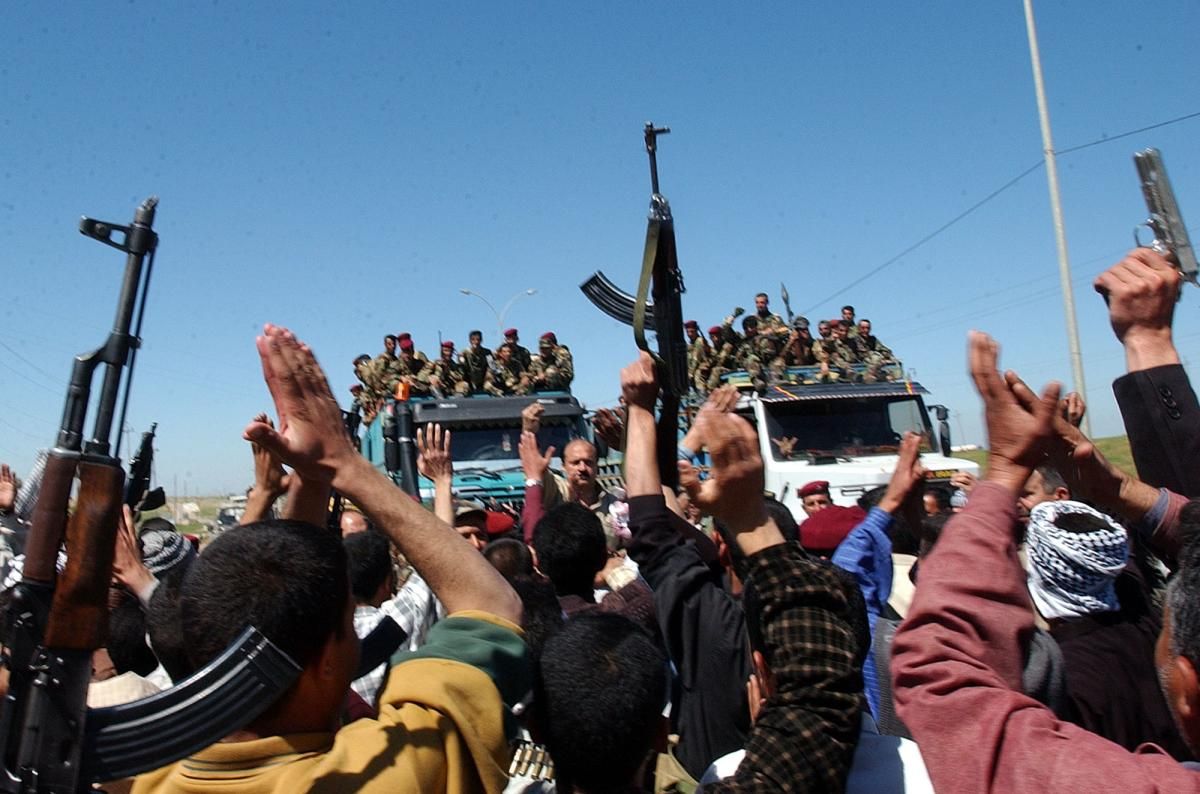
Iraq-Iran Border / Washington DC — Thousands of Kurdish fighters have launched a ground offensive inside Iran along the Iraq-Iran border, opening a potential new front in the conflict as Operation Epic Fury enters its fifth day.
According to a senior official from the Coalition of Political Forces of Iranian Kurdistan, fighters affiliated with the Kurdistan Free Life Party (PJAK) began taking combat positions inside Iranian territory at midnight on Wednesday. Iranian forces subsequently evacuated the border city of Mariwan and began establishing defensive positions in and around the area.
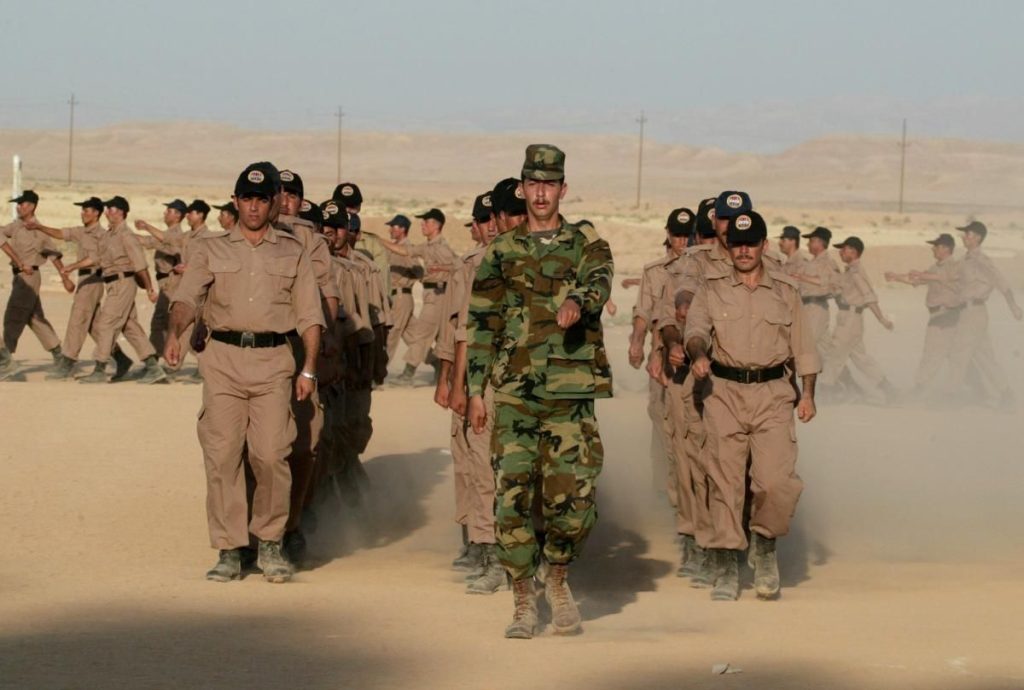
Thousands of Kurdish fighters are now reportedly deployed across Iran’s mountainous regions, particularly deep inside the Zagros Mountains, operating through PJAK’s two armed wings, the YRK Protection Units of Eastern Kurdistan and the HPJ Women’s Protection Forces.
The development comes as reports emerged that the CIA has been actively working to arm Kurdish forces to foment a wider popular uprising inside Iran.
CIA Arming Plan and White House Response
The Trump administration has been in discussions with Iranian opposition groups and Kurdish leaders in Iraq about providing military support to pin down Iranian security forces and create space for unarmed Iranians in major cities to protest.
President Trump spoke directly with Mustafa Hijri, head of the Democratic Party of Iranian Kurdistan, on Tuesday. Trump also held calls on Sunday with Masoud Barzani, who leads the Kurdistan Democratic Party, and Bafel Talabani of the Patriotic Union of Kurdistan.
However, White House Press Secretary Karoline Leavitt said at Wednesday’s briefing that any suggestion the president had approved a plan to arm Kurdish forces was “incorrect” and had “no factual basis.”
Defence Secretary Pete Hegseth similarly distanced the administration from the reports, saying: “None of our objectives is premised on the support or the arming of any particular force.”
Iraq’s Position — A Delicate Balancing Act
Iraq’s national security adviser Qasim al-Araji said Iraq would not allow groups “to infiltrate or cross the Iranian border to carry out terrorist acts from Iraqi territory,” adding that the Kurdistan Region’s Interior Ministry had sent Peshmerga security reinforcements to the border area.
Aziz Ahmad, Deputy Chief of Staff to the Prime Minister of Kurdistan, denied claims of a ground offensive as “patently false,” saying not a single Iraqi Kurdish fighter had crossed the border.
On Wednesday, the president of Iraq’s Kurdish region held talks with Iran’s foreign minister and pledged cooperation — signalling diplomatic engagement even as reports of cross-border military activity continued to emerge.
Conflicting Reports on the Ground
Iran’s Tasnim news agency said its reporters in three border provinces denied reports of any Kurdish ground offensive. A senior official in one of the Iranian-Kurdish factions also denied that a ground offensive had begun.
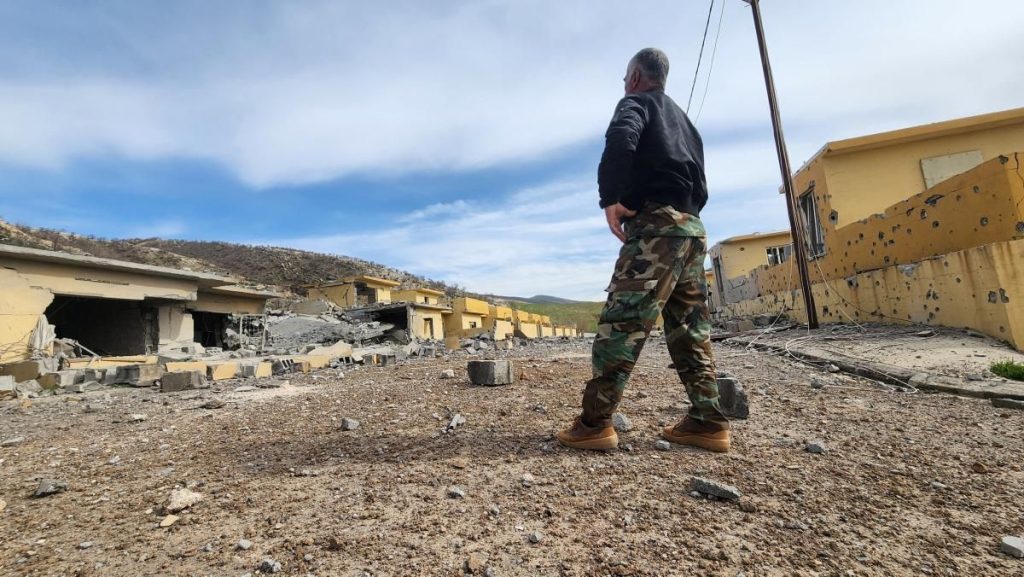
An official with Komala, one of the Kurdish Iranian groups, said Wednesday that their forces are ready to cross the border within one to two weeks and were “waiting for the grounds to be suitable.”
The situation on the ground remains difficult to independently verify, with conflicting accounts from Kurdish officials, Iranian state media and regional sources.
Who Are the Kurdish Groups Involved?
Several groups are reportedly prepared to cooperate with the US and Israel, including the Kurdistan Democratic Party of Iran (KDPI), Komala factions, the Freedom Party of Kurdistan (PAK) and PJAK. While PJAK has several thousand fighters, the other groups together have only a few hundred militants, many of whom fought against ISIS in Iraq and Syria.
The six major political factions representing Kurds in Iran have also announced the formation of a new coalition aimed at pursuing autonomy within the country — a development analysts say reflects the degree to which Kurdish groups view the current conflict as a historic opportunity.
“The Kurdish groups see what’s happening now as an opportunity in Iran to unite and stand for self-determination,” Hewa Khalid, a Kurdish studies expert at Indiana University, told the Jerusalem Post.
Khalid warned the outcome would depend heavily on who ultimately leads Iran following the reported death of Supreme Leader Khamenei.
“We could see a Kurdistan operating within Iran, or you could see the next Yugoslavia,” she said, referencing the violent fragmentation of the Balkan state in the 1990s.
Who Are the Kurds?
With more than 35 million people spread across the Middle East, the Kurds are widely regarded as the largest stateless ethnic group in the world. Kurdish populations are concentrated in Turkey, Iraq, Syria and Iran, with more than eight million living in Iran — roughly 10% of the country’s population.
Kurdish communities in Iran have long alleged political repression and cultural restrictions imposed by Tehran over several decades. Kurdish fighters previously worked alongside US forces during operations against Saddam Hussein’s government in Iraq and later played a key role in combat operations against the Islamic State in Syria.
Strategic Risks
US intelligence assessments have consistently indicated that Iranian Kurds do not currently have the influence or resources to sustain a successful uprising against the government on their own. Kurdish parties are also seeking political assurances from the Trump administration before committing fully to any resistance effort.
Jon Alterman, a Middle East expert at theCentre for Strategic and International Studies, warned that failure could be catastrophic for Kurdish communities.
“If the regime is still stable after this, Iran will go after the opposition, and that would be bad for the Kurds,” he said, noting that security forces have previously used lethal force against unrest.
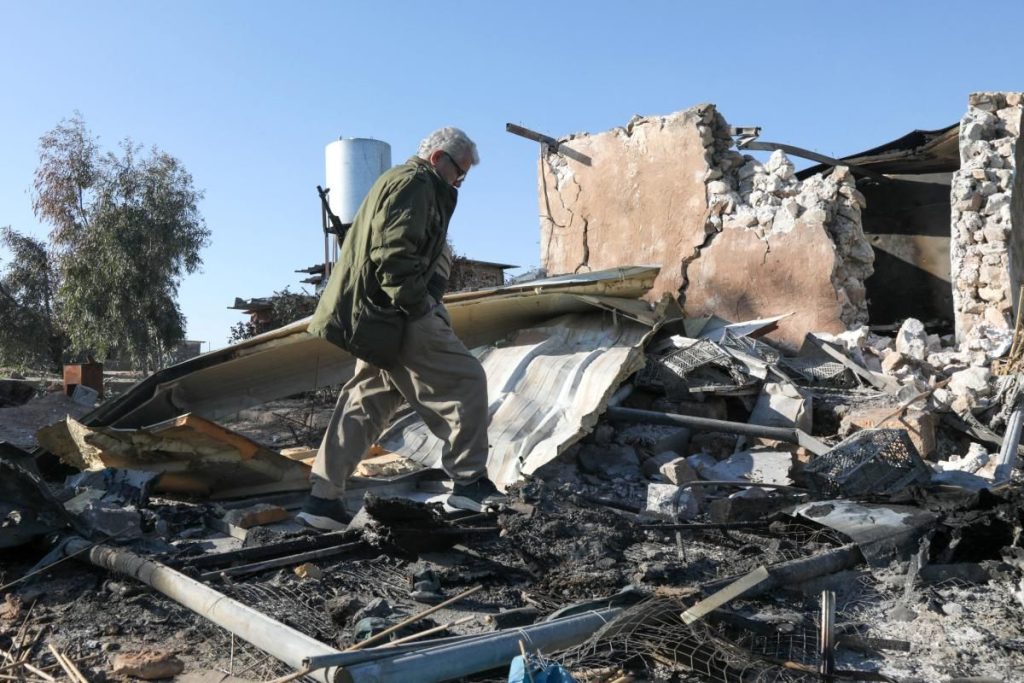
“Many don’t see what happened as a betrayal and remember how the US helped the Kurds in Iraq,” said Shukriya Mahmmoodee Bradost, a Middle East security expert. “Their hope is for federalism and autonomy in Iran, and they will fight for that.”
IRGC Warning and Drone Strike
Amid the reports, Iran’s Islamic Revolutionary Guard Corps has warned of severe retaliation. A drone strike on a militia position in Iran injured two Kurdish fighters on Wednesday, in what analysts described as an early signal of Tehran’s intent to suppress cross-border activity.
Senior Iranian officials have already vowed retaliation against the US and Israel more broadly, while Israel has warned that any successor to Khamenei who continues hostile policies will be considered a target for elimination.
This article is based on reporting from the Jerusalem Post, Reuters and regional media sources. This is a developing story. Updates will follow as more facts are confirmed.
