


Dayo Ade Olusola|M10news| Ireland|29 January 2026
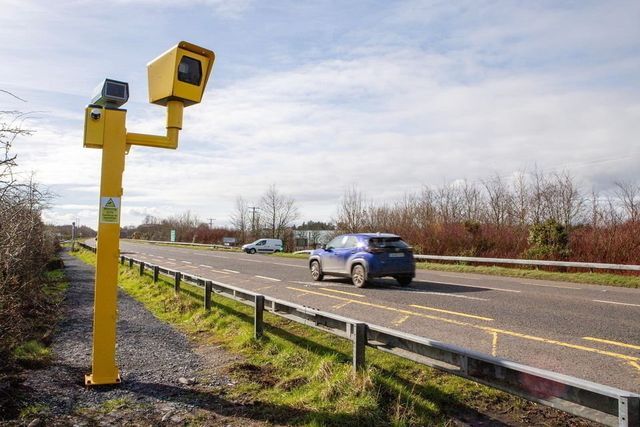
Red light enforcement cameras are to be installed at railway level crossings across Ireland, beginning with sites in Counties Kerry and Roscommon, as authorities step up efforts to reduce dangerous driver behaviour at rail interfaces.
The rollout follows confirmation that Dublin’s first permanently operating red light camera will go live at Merrion Gates, a busy DART and Intercity railway crossing in the capital.
Merrion Gates Selected After Persistent Safety Concerns
The Merrion Gates installation comes more than ten years after a trial red light camera was deployed at a Luas crossing, where repeated collisions occurred between trams and road users.
This time, the focus has shifted to heavy rail infrastructure. Irish Rail trains are being prioritised for enforcement coverage, following delays in the broader rollout of red light cameras at standard road junctions.
Those delays are linked to a draft national strategy on camera-based enforcement, submitted to the Department of Transport in May 2025, which has yet to be finalised.
Despite the delay, the Department has reiterated that reducing fatalities on Irish roads remains a central objective, describing it as “an absolute priority of the Ministers, the Department and Government”.
Cameras Tested and Ready to Go Live
Irish Rail confirmed that the Merrion Gates cameras have been extensively tested and will be activated shortly. The project is being delivered in partnership with An Garda Síochána and Dublin City Council.
The technology will automatically detect vehicles that cross the stop line while warning lights are flashing at a railway level crossing.
Fines and Penalty Points for Offenders
Motorists who breach red lights at level crossings face an €80 fine and two penalty points. The same system will also identify speeding offences, which carry a €160 fine and two penalty points.
As with other fixed speed and traffic enforcement systems nationwide, the cameras will be operated by GoSafe on behalf of An Garda Síochána.
Rising Number of Collisions at Level Crossings
Irish Rail data shows 23 collisions in 2025 and 28 in 2024 involving vehicles or bicycles striking level crossing barriers.
The company has warned that illegal crossing and speeding can prevent gates from lowering correctly, forcing trains to slow or stop and causing wider disruption to the rail network.
Senior Officials Welcome Safety Initiative
Irish Rail Chief Executive Mary Considine said level crossings remain one of the most serious safety risks on the railway.
“Interface between road and rail users at level crossings represents one of the greatest safety risks on the railway,” she said.
“The installation of Garda GoSafe cameras, firstly here at Merrion Gates and at other level crossings across the country, will encourage drivers to always act safely.”
Assistant Garda Commissioner Catharina Gunne, who oversees roads policing, said the technology would strengthen enforcement.
“We welcome this next stage of cooperation with our partners in transport safety,” she said.
“The effective use of this technology will greatly help us to keep rail and road users safe.”
She also urged motorists to remain vigilant, warning drivers to heed warning lights and stop when required to avoid serious risk.
Local Authority Support and Further Expansion
Dublin City Lord Mayor Cllr Ray McAdam said the council supports the initiative and expects wider deployment across the city.
“These traffic signals are installed to assist all road users and pedestrians, and we look forward to seeing more of this technology rolled out,” he said.
Irish Rail confirmed the Merrion Gates camera is the first of up to six units, some of which will be moved between locations depending on driver behaviour.
Kerry and Roscommon Next in Line
The next planned installations are at Farranfore and Minish in County Kerry, and Knockcroghery in County Roscommon, where speeding has been identified as the main safety concern.
Irish Rail said the cameras are designed to be easily relocated, allowing enforcement to be targeted where compliance is weakest.
“Merrion was selected first due to traffic surveys showing persistent driver behaviour issues,” the company said, noting that compliance rates of up to 98.6% have been recorded where similar systems operate on Irish roads.
Further Dublin locations under consideration include Serpentine, Sutton, Coolmine and Sandymount, where previous incidents have been logged.
