


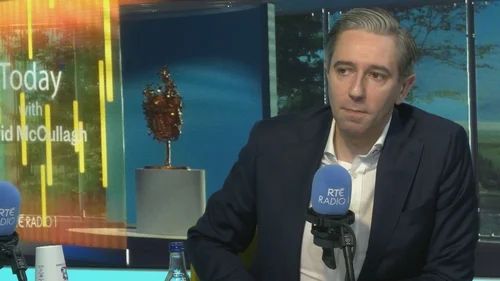
The Tánaiste has said that the issues of homelessness and migration “will not go away,” insisting that not everyone currently in emergency accommodation has a legal entitlement to long-term State housing.
Speaking on RTÉ’s Today with David McCullagh, Simon Harris was pressed on comments he made to the Irish Times last month, where he stated that a “significant number” of people in emergency housing “don’t have housing rights in Ireland.”
He responded by saying “there is a bit of nuance here,” arguing that the public debate must distinguish between access to emergency shelter and eligibility for long-term social housing.
Harris Says Debate Must Recognise “Nuance” in Housing Eligibility
Mr Harris noted that while everyone has a right to emergency accommodation, Irish housing law sets separate criteria for entry onto the social housing list, including residency rules that apply to non-Irish nationals.
The Tánaiste added that the Government intends to bring forward new primary legislation to “provide further clarity” on how eligibility is determined.
He said it is difficult to have an informed debate on homelessness without acknowledging the “composition” of those using emergency services and “indeed our migration situation.”
According to the Tánaiste, there is now roughly a 50/50 split between Irish citizens and non-Irish citizens in emergency accommodation — a shift he said marks a “significant change” in recent years.
Subheading 2: Circular 41/2012 Outlines Who Qualifies for Social Housing
Mr Harris referenced Circular Housing 41/2012, the framework that determines whether non-Irish nationals qualify for social housing supports. He stressed that having a “right to reside” in Ireland does not automatically confer a “right to social housing.”
Under this system, local authorities apply different criteria based on nationality, residency status, and protection status. The Tánaiste argued that this structure remains essential for managing limited housing resources.
He said the Government’s upcoming legislation will aim to codify these rules more explicitly so local authorities and applicants “are working from the same clear legal basis.”
Below is the eligibility structure referenced:
| Group | Social Housing Eligibility |
|---|---|
| Irish & UK Citizens | Eligible based on income and established housing need. |
| EEA Nationals | Eligible if employed, self-employed, or temporarily unable to work with retained worker status. |
| Refugees / Subsidiary Protection | Eligible from the date protection status is formally granted. |
| Non-EEA Nationals | Generally require five years of reckonable residence (Stamp 1, 4, or 5). |
| Asylum Seekers | Not eligible for the housing list while applications are pending. |
Subheading 3: Debate Intensifies Over Migration and Housing Pressures
The Tánaiste acknowledged that the growing number of non-Irish nationals in emergency accommodation raises complex policy questions that “cannot be ignored.”
He said the Government is obligated to provide humanitarian emergency shelter but must also protect the integrity of the social housing system.
Opposition parties, homeless charities, and migrant advocacy organisations have criticised the remarks, arguing that focusing on nationality risks “politicising homelessness” during a period of rising pressure on housing services.
However, Mr Harris said the Government must address the realities facing local authorities, particularly as migration patterns shift and demand for emergency accommodation remains high.
He reiterated that new legislation is intended to bring “legal clarity,” not to restrict rights, and insisted that decisions on social housing must remain based on clear, established criteria.
The Tánaiste concluded that while the housing crisis remains a major challenge, a factual and nuanced debate is essential if Ireland is to manage both homelessness and migration pressures effectively.
