


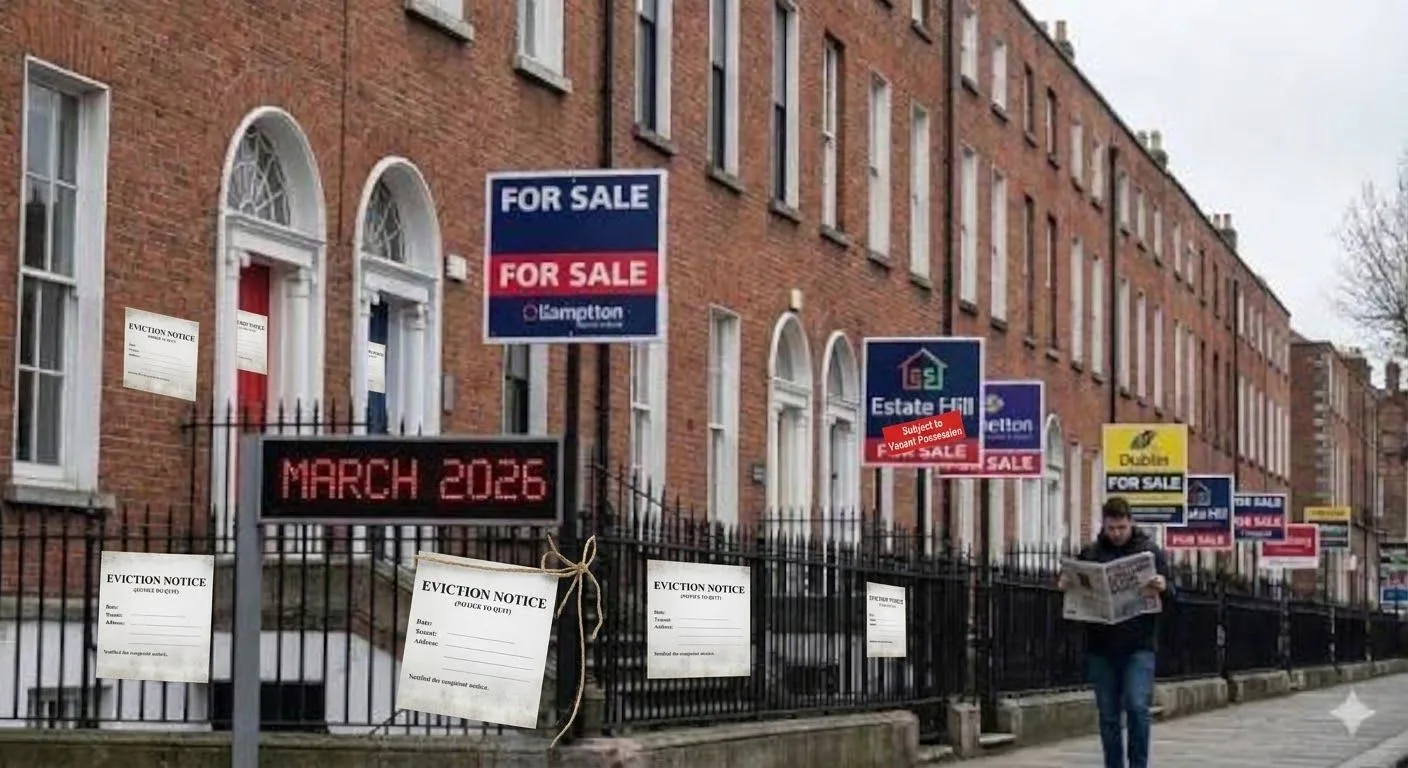
Some private landlords in the Netherlands are reportedly offering tenants more than €100,000 to voluntarily leave their homes before the properties are sold.
The payments highlight the financial value of vacant properties, growing pressure on private rental investors and the difficulties tenants face when trying to find alternative accommodation.
Landlords in the Netherlands are increasingly exploring financial agreements with tenants to secure vacant properties before putting them on the market, with some offers reportedly exceeding €100,000.
The development was highlighted by Dutch property company Proranje Vastgoed, which specialises in purchasing residential properties that are already occupied by tenants.
According to the company, more than half of the private property investors who contacted it during the third quarter of 2026 had already attempted to persuade their tenants to end their rental agreements in exchange for financial compensation.
While many offers are reportedly worth tens of thousands of euros, some have exceeded €100,000.
The reason is largely financial. Properties sold without tenants can attract substantially higher prices than comparable homes sold with existing rental agreements in place.
For landlords looking to sell, paying a tenant to leave voluntarily can therefore become a commercial calculation rather than simply an additional expense.
Why landlords are offering tenants six-figure payments
The difference between the value of an occupied and vacant property is central to the growing trend.
When a property is sold with a tenant in place, a potential buyer must take account of the existing rental agreement, the rent being paid and the legal protections enjoyed by the tenant.
This can limit the number of interested buyers, particularly among people hoping to purchase a home to live in themselves.
An investor purchasing an occupied property may also have to accept a relatively low rental income and existing contractual conditions.
By comparison, a vacant property can be marketed to a wider range of buyers, including owner-occupiers who want to move in immediately.
Jelmer Schortinghuis, owner of Proranje Vastgoed, said the company regularly hears about landlords offering tenants substantial sums to leave.
He explained that, in exceptional cases, the proposed payments exceed €100,000 because the financial difference between selling an occupied and vacant property can be considerable.
The company says that some owners first attempt to negotiate a voluntary departure agreement before considering selling the property with the tenant remaining in place.
Why some tenants refuse to leave despite large offers
Despite the substantial payments being discussed, not every tenant is willing to accept an offer.
For people with relatively low rents and open-ended rental agreements, leaving can create significant financial and practical difficulties.
Finding another property at a comparable rent may be difficult, particularly in a housing market where suitable rental accommodation is limited.
A tenant paying a relatively low monthly rent could face a much higher housing bill after moving into a newly rented property.
For example, accepting a large one-off payment may appear attractive initially, but the money could be offset by higher rent, moving expenses and the cost of securing another home.
The decision can be particularly difficult for households that have lived in the same property for many years and have established their lives around their existing location.
This helps explain why some tenants reject even substantial financial offers.
For them, remaining in a secure home may be more valuable than receiving a payment that cannot guarantee comparable accommodation elsewhere.
Landlords are increasingly looking to sell rental properties
The reported offers are part of a wider reassessment taking place among some private property investors in the Netherlands.
Proranje Vastgoed said it received more than 31% additional enquiries from private property owners looking to sell rental homes in the third quarter of 2026 compared with the same period in 2025.
The company linked the increase partly to uncertainty surrounding Box 3, the Dutch tax system covering income and returns from savings and investments.
The proposed reform of Box 3 is intended to move towards taxation based on actual returns from assets, including investment properties.
The Dutch Government is aiming to introduce the new system from 1 January 2028, although the legislative process and possible adjustments remain important considerations.
For landlords, uncertainty about future taxation can make it more difficult to calculate the expected financial returns from holding rental properties.
Changes in taxation, rental regulation, property values and maintenance costs can all influence decisions about whether to continue letting a property or sell it.
However, the 31% increase reported by Proranje represents enquiries received by that individual company. It should not be interpreted as a 31% increase in rental property sales across the Netherlands.
What happens when a landlord sells an occupied property?
A landlord in the Netherlands does not automatically have the right to remove a tenant simply because the property is being sold.
The principle known as koop breekt geen huur means that a sale does not terminate an existing tenancy.
In general, when a rented property changes ownership, the new owner takes over the existing rental agreement and the associated landlord obligations.
This means that tenants with protected rental agreements can normally remain in their homes even when the property is sold.
A landlord may therefore have to choose between negotiating a voluntary departure agreement or selling the property with the tenant still living there.
A voluntary agreement can offer advantages to both parties, provided the tenant understands the terms and agrees freely.
For the landlord, it can make the property more attractive to buyers seeking vacant accommodation.
For the tenant, it can provide money to help secure alternative housing, although the payment must be weighed against the cost and availability of another home.
The important distinction is that a financial offer is not the same as a legal requirement to leave.
A difficult balance between property investment and tenant security
The situation highlights a wider challenge facing the Dutch rental market.
Property investors want the freedom to manage or sell their assets, particularly when changing regulations and taxation affect their expected returns.
Tenants, meanwhile, depend on rental agreements to provide stability and protection against losing their homes.
When an occupied property is worth considerably less to a potential buyer than a vacant one, the financial incentive to negotiate with tenants becomes stronger.
However, this can place tenants in a difficult position, especially when suitable alternative accommodation is difficult to find.
The issue also raises questions about the long-term availability of private rental housing.
If more landlords decide to sell their investment properties to owner-occupiers, some homes could leave the private rental market altogether.
That may provide opportunities for buyers seeking to become homeowners, but it could also reduce the number of properties available to people who depend on renting.
The overall impact will depend on how many properties are sold, who purchases them and whether new rental homes replace those leaving the market.
What the Dutch trend could mean for Europe’s rental markets
The developments in the Netherlands offer an important example of the relationship between property investment, rental regulation and tenant security.
Across Europe, governments are trying to balance the need for investment in housing with the protection of people who rely on rented accommodation.
The Dutch experience illustrates how changes in taxation and rental-market conditions can influence the decisions of private landlords.
It also demonstrates the financial value that an existing tenancy can represent to a household.
For a tenant who has secured a relatively affordable home, leaving may mean losing an arrangement that would be difficult or expensive to replace.
For an investor, however, securing vacant possession can substantially change the potential sale value of a property.
The reported six-figure offers show how far some landlords are prepared to go to bridge that difference.
Whether the trend continues will depend on future tax changes, property market conditions and the financial decisions of private investors.
For tenants, the central issue remains whether they can find suitable alternative accommodation without sacrificing the security and affordability of their existing homes.
