


Market rents across Ireland rose by 4.4% during 2025, according to the latest Rental Report published by Daft.ie, marking an acceleration from the 3.6% increase recorded in 2024.
The findings underline continuing pressure in the rental market, where supply remains historically constrained and demand remains elevated.

Between September and December 2025, the average market rent for a two-bedroom apartment nationwide reached €2,086 per month, reflecting sustained affordability challenges for tenants.
Rental Supply Falls to Historic Low
The report also found that fewer than 1,800 homes were available to rent nationwide on 1 February, representing a 22% decline compared to the same date in 2025.
According to Daft, this is the lowest level of rental availability for early February in a data series stretching back to 2006.
The drop in supply has been particularly severe in , where the number of available rental properties has fallen by more than one third year-on-year.
“Our analysis of Dublin listings shows that ‘no-pet’ policies are becoming a secondary barrier, alongside the 3% rent hike reported by Daft.”

Analysts say the shrinking stock of rental homes continues to intensify competition among tenants, particularly in urban centres where employment growth remains strong.
Regional Rent Trends
While rent inflation varied across the country, several cities recorded notable increases in the final quarter of 2025:
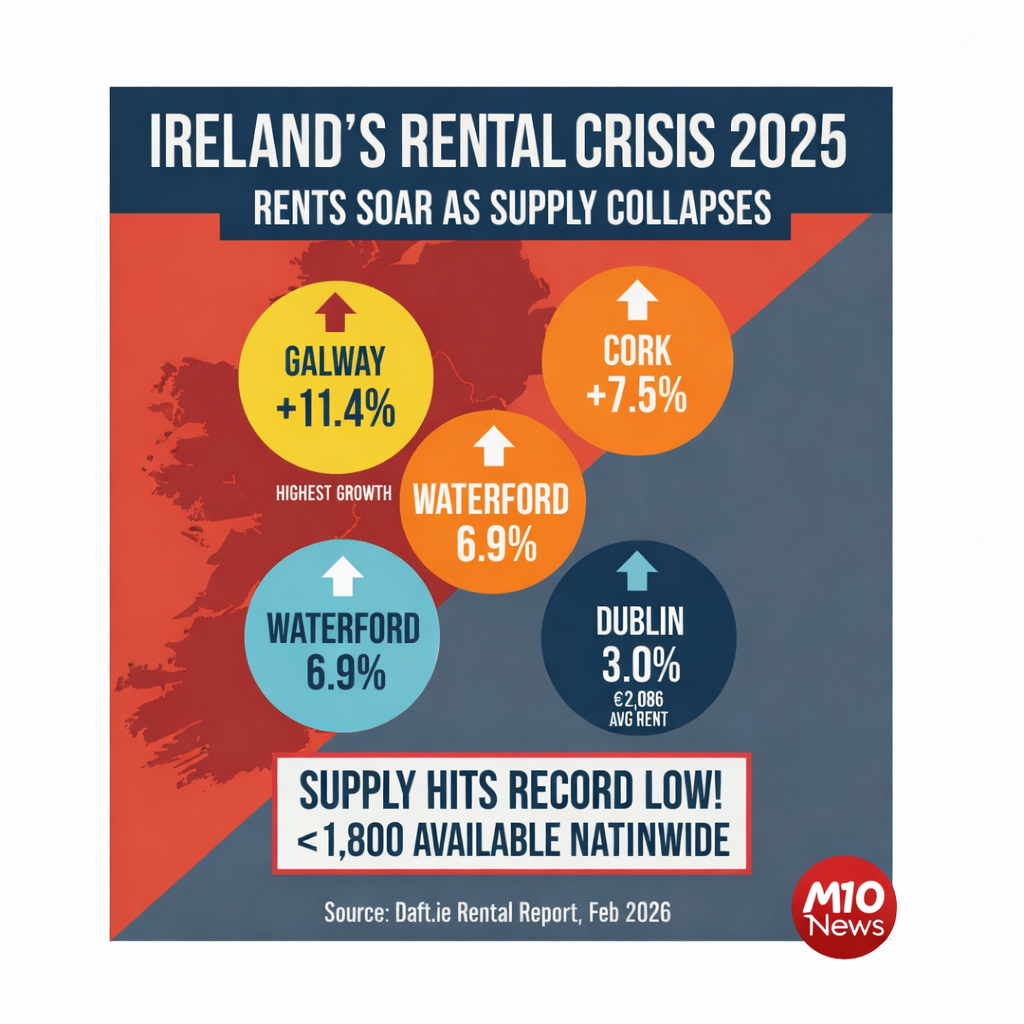
In contrast, rent inflation in Dublin stood at 3%, although it accelerated as the year progressed.
Nationally, rents have now increased in 13 of the last 14 years, are approximately one third higher than pre-Covid levels, and have risen by 80% over the past decade.
Impact of Rent Controls and Policy Changes
Commenting on the findings, report author , Professor of Economics at , pointed to policy uncertainty as a contributing factor.
“Widespread uncertainty about the new rent controls appears to have exacerbated ongoing supply shortages in the rental market,” Professor Lyons said.
“Across the country, there have been steep falls in rental availability over the last year.”
He added that it remains unclear whether some landlords are delaying listings ahead of new tenancy rules coming into effect on 1 March, or whether tighter rent controls are contributing to a reduction in rental stock as property owners exit the market.

Structural Supply Pressures
Housing analysts caution that the rental market’s difficulties extend beyond short-term policy changes. Ireland has faced persistent housing supply deficits for over a decade, with rental stock failing to keep pace with population growth and urbanisation.
While new housing completions have risen in recent years, delivery has not been sufficient to restore balance between supply and demand — particularly in high-employment urban areas.
The sharp decline in available listings highlights the fragility of rental supply and reinforces concerns that further stock contraction could intensify upward pressure on rents throughout 2026.
Outlook
With new tenancy legislation due to take effect in March and ongoing debate about rent regulation, market conditions in the coming months will be closely watched by policymakers, landlords and tenants alike.
For now, the latest figures confirm a persistent pattern: rising rents, tightening supply, and a rental sector under sustained strain.
