


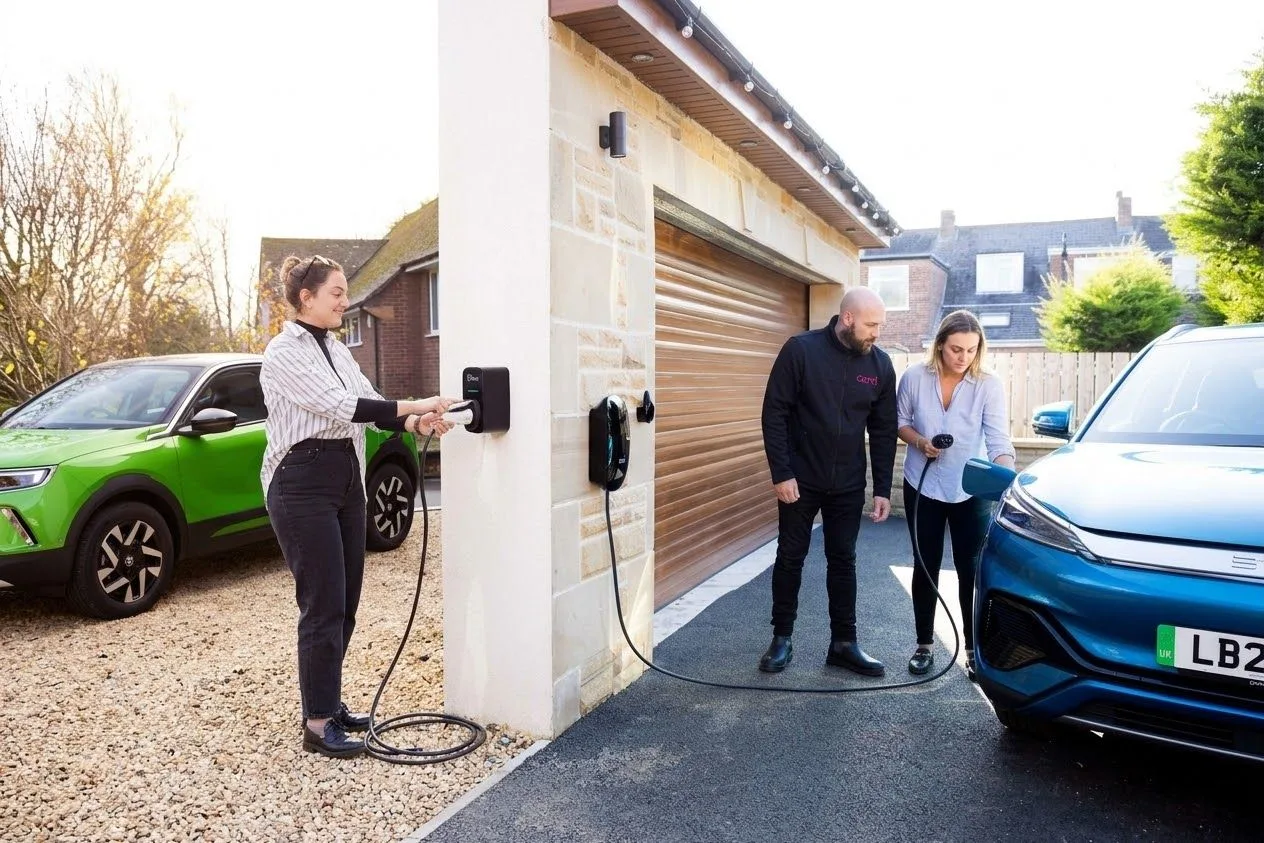
The Government is consulting on proposals that would require landlords and freeholders to respond to requests for home electric vehicle chargers within a set period and not unreasonably refuse permission.
Tenants and leaseholders in UK could receive clearer procedures for requesting electric vehicle (EV) charge points at their homes under new government proposals.
The consultation follows concerns that people who rent or lease their homes can face difficulties securing approval to install charging equipment. In some cases, requests may be refused without applicants receiving a clear explanation.
The Government is considering whether landlords and freeholders should be expected to acknowledge a request and provide a formal written response within 28 calendar days.
Under one option, legislation would also require them not to unreasonably refuse a request. However, the proposals are still under consultation, and the Government has not yet decided whether to introduce new laws or issue non-statutory guidance.
Landlords could be asked to respond within 28 days
The consultation proposes a clearer process for tenants and leaseholders seeking permission to install an EV charge point.
After receiving a request, a landlord or freeholder would be expected to acknowledge it and then provide a formal written decision within 28 calendar days.
If permission were refused, the response would have to explain the reasons.
The aim is to give applicants greater certainty about whether an installation is likely to be approved, how long a decision may take and what responsibilities or costs they could face.
At present, tenants and leaseholders may encounter obstacles when seeking permission to install charging equipment. The Government says that uncertainty around approvals can make it harder for people without private driveways or direct control over their properties to charge an electric vehicle at home.
Consultation weighs guidance against new legislation
The Government is considering two possible approaches.
One option is non-statutory guidance encouraging landlords and freeholders to deal with requests promptly, explain their decisions and provide evidence when refusing an installation. Under this approach, they would not be legally required to approve a charge point.
The other option is legislation setting out formal response requirements and requiring landlords and freeholders not to unreasonably refuse requests.
If legislation is introduced, the proposed rules would place a clearer obligation on property owners to make decisions within a reasonable process. The consultation is intended to gather information about the challenges landlords and freeholders face and how the Government could support the wider installation of home chargers.
When might a refusal be considered reasonable?
The proposals identify circumstances in which a request could reasonably be refused.
These could include an installation that would breach an existing lease term or other statutory obligations. A lack of off-street parking available to the tenant could also be a reason for refusing a request.
The consultation is seeking views on how such decisions should be assessed and what information landlords and freeholders should provide when they decline permission.
The proposals do not mean every tenant will automatically be entitled to install a charger. The outcome could depend on the property, parking arrangements, legal obligations and the final rules adopted by the Government.
Tenants would be responsible for installation costs
Under the proposals, the tenant or leaseholder requesting a charger would be responsible for arranging and paying the upfront costs.
These could include the charge point itself, installation work and any fees associated with obtaining permission for alterations.
The Government says clearer procedures could help applicants understand the likely costs and responsibilities before proceeding.
That may be particularly relevant for people living in rented homes or leasehold properties, where installation could require approval from more than one party.
Cross-pavement chargers are part of the wider home-charging plan
The consultation follows a separate announcement that drivers in England will no longer need planning permission to install certain cross-pavement charging solutions.
These systems allow a charging cable to run from a home across the pavement to a vehicle parked outside. The planning change is intended to simplify installation and could save drivers up to £300, according to the announcement.
The measure addresses a different barrier from landlord permission: it concerns planning requirements for charging arrangements that cross public pavements.
Together, the initiatives form part of the Government’s wider effort to make home charging more accessible to people who cannot park a vehicle on a private driveway.
Government grant could help with installation costs
Earlier this year, the Government also announced support through a grant scheme that could help landlords, renters, flat owners, homeowners without driveways and businesses save up to £500 when installing eligible charge points.
The grant is a separate measure from the landlord-consent consultation. Eligibility, available funding and the amount payable depend on the scheme’s terms.
The proposed response deadline and possible restrictions on refusing permission are also not yet in force. The consultation will help the Government decide whether to proceed with guidance, legislation or another approach.
What the proposals could mean for renters
For tenants and leaseholders in UK, the proposals could make it easier to understand how to request a home EV charger and what to expect from a landlord or freeholder.
A written decision within a defined period could reduce uncertainty, while an obligation to explain refusals could help applicants understand whether a problem relates to parking, the lease, legal requirements or the proposed installation itself.
But the practical effect will depend on the Government’s final decision and any legislation or guidance that follows. The proposals apply to England and should not be presented as a change to tenants’ rights in Ireland.
