


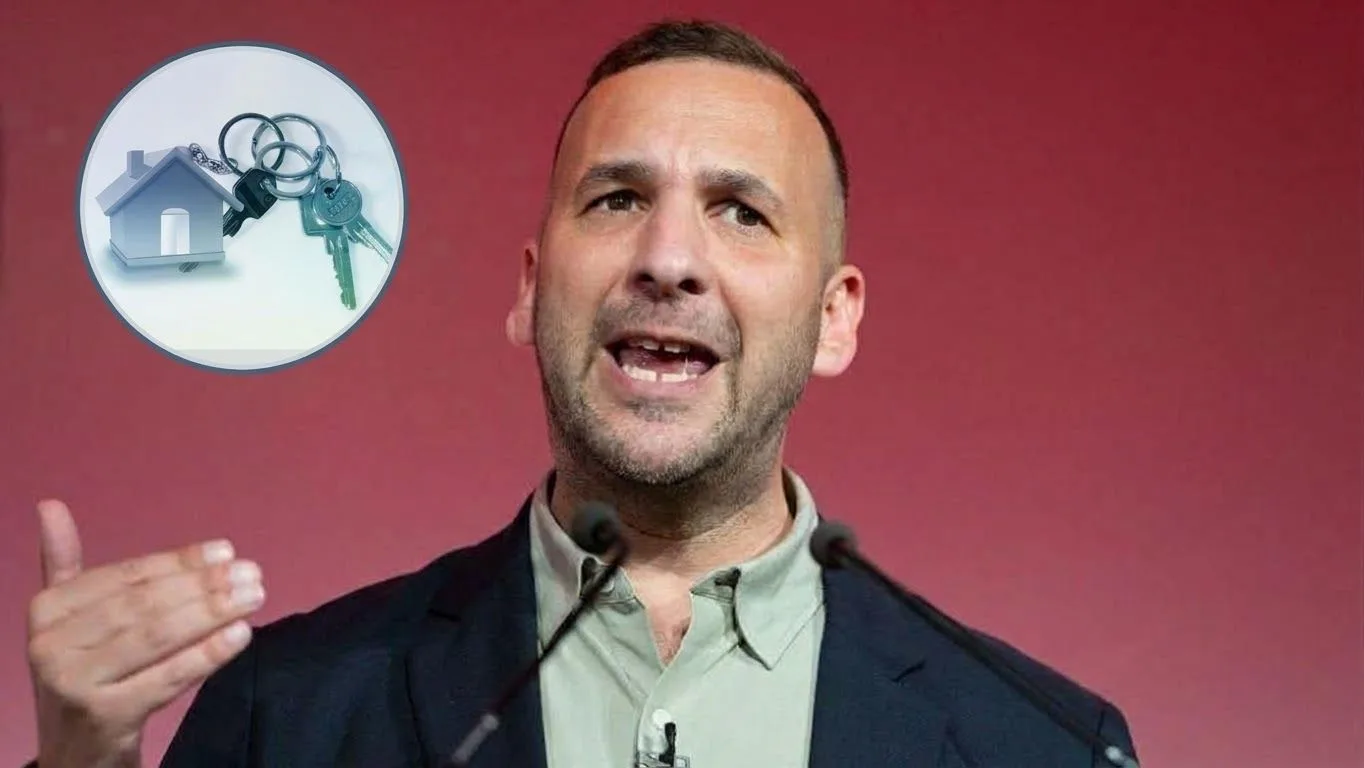
The Green Party has called for a three-year limit on private rent increases, arguing that renters need protection from rising housing costs while wages catch up.
Green Party leader Zack Polanski announced the proposal at the party’s conference in Brighton. Under the plan, annual increases in private rents would be restricted to whichever is lowest among Consumer Prices Index (CPI) inflation, wage growth or 2%.
The party describes the proposal as an “emergency brake” and says it would form part of a longer-term Fair Rents Guarantee designed to keep private rents affordable.
What would the proposed rent cap do?
The proposal would limit how much landlords could increase rents during the three-year period.
The important feature is that the 2% figure would not necessarily be the maximum increase in every year. The applicable limit would be whichever is lower between CPI inflation, wage growth and 2%.
The Greens say the policy would give tenants greater certainty over their housing costs and prevent sharp increases from putting additional pressure on household finances.
The party also argues that the temporary measure would provide time for earnings to narrow the gap with rents.
However, the proposal is a political commitment rather than a policy currently in force across the UK. Its implementation would require government action and legislation.
Why the Greens say action is needed
The Green Party argues that renters have faced housing costs that have risen faster than incomes, leaving some households with less money available for other essentials.
The party’s longer-term proposal goes beyond the temporary cap. It wants a national Fair Rents Guarantee, alongside increased investment in housing and measures intended to improve affordability.
Polanski has presented the emergency measure as a way of giving renters immediate relief while a broader housing policy is developed.
Propertymark warns about housing supply
The proposal has drawn opposition from within the property sector.
Timothy Douglas, Propertymark’s head of policy and campaigns, said tenants are experiencing genuine affordability problems but argued that limiting rents would not resolve the shortage of homes or the costs associated with providing and maintaining rental properties.
Propertymark has instead called for policies that increase housing supply and support continued investment in the private rented sector.
Douglas also pointed to experience reported by Propertymark members in Scotland, including concerns about investment, changes in rents between tenancies and landlords leaving the sector following temporary rent restrictions.
That argument highlights a central difficulty in the rent-control debate: protecting tenants from rising costs while ensuring that enough homes remain available to rent.
Scotland offers a different model
The debate is particularly relevant because Scotland has already established a legal framework allowing rent controls to operate in designated areas.
Under the Housing (Scotland) Act 2025, Scottish ministers can designate rent control areas where conditions meet specific criteria. From April 2026, local authorities have been required to assess rental conditions in their areas, with the first reports due by May 2027.
Where an area is designated, increases for applicable private residential tenancies can be limited to CPI plus 1%, subject to a maximum of 6%. The Scottish system is therefore different from the Green Party’s proposed UK-wide three-year formula.
This distinction is important because “rent controls” do not represent one single policy. Different systems can regulate increases in different ways and apply them to different properties or locations.
The bigger problem: affordability versus supply
The argument over rent controls comes back to a wider problem facing the UK private rented sector.
Tenants need rents they can afford, but landlords also face mortgage payments, maintenance, insurance, taxation, compliance requirements and other costs associated with owning and operating rental property.
If regulations limit rental income while the cost of providing homes continues to rise, landlords may decide to sell properties or reduce investment. Critics of rent controls argue that this could shrink the supply of privately rented homes and make competition for available properties even greater.
Supporters of rent controls take a different view. They argue that tenants cannot simply absorb continually rising rents and that stronger limits are necessary where housing costs are putting excessive pressure on household incomes.
The effect of any rent-control policy therefore depends not only on the level of the cap but also on what happens to housing construction, landlord investment, public housing and demand for rented homes.
What it could mean for tenants and landlords
For tenants, a cap could provide greater predictability and make it easier to plan household finances during the period covered by the policy.
For landlords, the impact would depend on their individual costs, existing rent levels and how the rules were designed and enforced.
There is also an important distinction between controlling increases for existing tenants and keeping rents affordable for people entering the market. A policy that limits increases for sitting tenants does not, by itself, create additional homes.
That is why housing supply is likely to remain at the centre of the debate.
Rent controls are not a substitute for building homes
The Green Party’s proposal has put rent regulation back into the UK housing debate, but the underlying shortage of affordable homes remains unresolved.
A lasting improvement in rental affordability is likely to depend on several factors, including the number of homes being built, the availability of social housing, household incomes and the costs faced by landlords.
The proposed three-year emergency brake would address one part of that problem by limiting rent increases. Whether it could improve affordability without creating additional pressure on the supply of private rented homes would depend on how the policy was implemented and what wider housing measures accompanied it.
For renters and landlords, that wider question may ultimately matter as much as the proposed 2% limit itself.
