


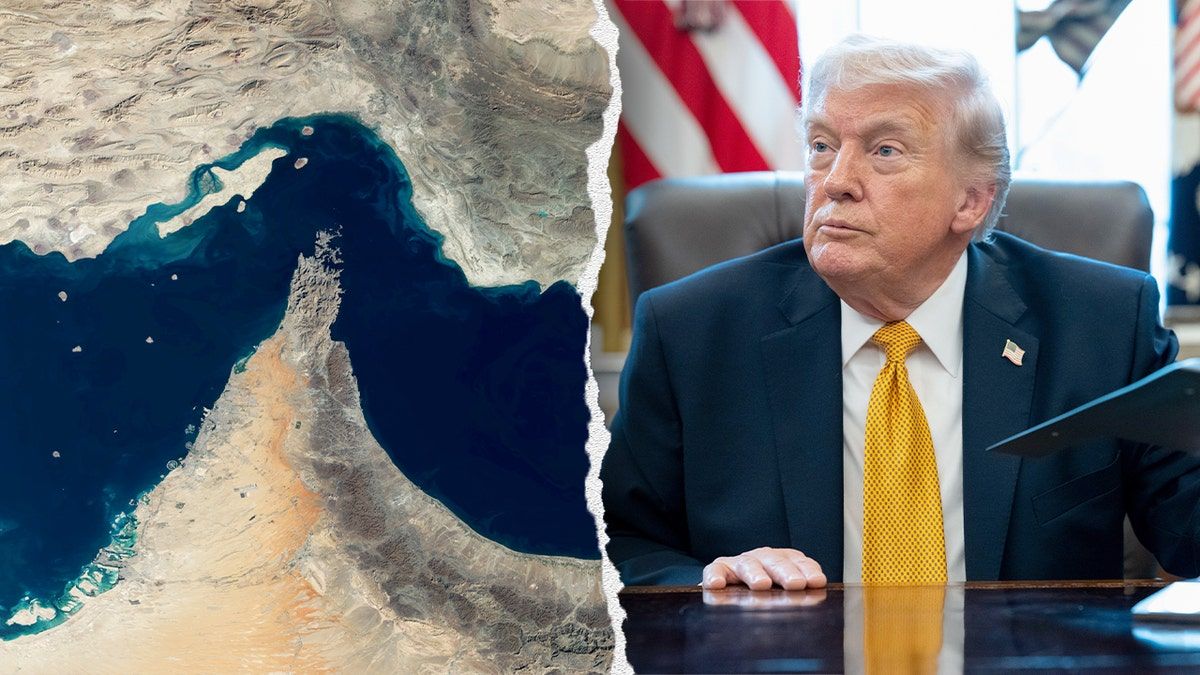
WASHINGTON/ISLAMABAD, Tuesday — Hours after Donald Trump told the world that “a whole civilization will die tonight,” the bombs did not fall. Instead, Pakistan’s prime minister picked up the phone.
What happened in the space of ninety minutes on Tuesday evening will be studied by diplomats for years. Trump had his deadline. He had his strike plan. He had his finger, in effect, on the trigger. And then Shehbaz Sharif called, Field Marshal Asim Munir called, and the most dangerous moment in the six-week Iran war quietly became something else entirely.
Trump announced the suspension on Truth Social, saying he had agreed to hold off “the destructive force being sent tonight to Iran” following urgent conversations with both Pakistani leaders, and subject to Iran agreeing to the “COMPLETE, IMMEDIATE, and SAFE OPENING” of the Strait of Hormuz. The ceasefire runs for two weeks. Talks begin in Islamabad on Friday.
The US military ordered all offensive operations in Iran to cease immediately. Just like that, the war paused.
What Trump Said — and What He Didn’t
The president’s Truth Social post was equal parts announcement and victory lap. “This will be a double sided CEASEFIRE,” he wrote. “The reason for doing so is that we have already met and exceeded all Military objectives, and are very far along with a definitive Agreement concerning Longterm PEACE with Iran, and PEACE in the Middle East.”
He said Iran had submitted a 10-point proposal and that negotiators viewed it as a workable basis for moving forward. “Almost all of the various points of past contention have been agreed to between the United States and Iran,” he wrote, “but a two week period will allow the Agreement to be finalized and consummated.”
White House press secretary Karoline Leavitt added little to that. “The truth is that President Trump and our powerful military got Iran to agree to reopening the Strait of Hormuz, and negotiations will continue,” she said.
What she did not say and what nobody in Washington is saying clearly is what the 10-point Iranian proposal actually contains, what the US has agreed to in return, and whether Israel, which has its own objectives in the conflict, is genuinely on board with what comes next.
Iran’s Supreme National Security Council was careful with its own wording. Its statement accepting the ceasefire came with a warning: “It is emphasized that this does not signify the termination of the war. Our hands remain upon the trigger, and should the slightest error be committed by the enemy, it shall be met with full force.”
That is not quite the language of peace. But it is not the language of missiles either. For now, that is enough.
Iran’s Conditions: Open, But Carefully
Iranian Foreign Minister Abbas Araghchi confirmed Tehran’s acceptance and said safe passage through the Strait of Hormuz would be possible during the two-week period — but only via coordination with Iranian armed forces.
That caveat matters. Iran is not simply reopening the strait. It is managing the reopening, retaining operational control over who passes through and when. Israel, for its part, agreed to the ceasefire for operations in Iran, though a person familiar with the situation told reporters that Tel Aviv would like to have achieved more in the war. Israeli Prime Minister Benjamin Netanyahu denied that any ceasefire applied in Lebanon, though he said Israel would comply in Iran.
So the ceasefire is real, but its edges are contested. Pakistan’s prime minister said it applies “everywhere,” including Lebanon. Netanyahu said otherwise. That contradiction has not been resolved. It may not need to be resolved this week. It will absolutely need to be resolved in Islamabad.
Pakistan’s Extraordinary Hour
Twelve hours before the deadline, Pakistan’s Foreign Minister Ishaq Dar was up at three in the morning making calls. He rang the foreign ministers of Egypt, Saudi Arabia, Turkey and Morocco in rapid succession, briefing them on the “evolving regional situation.” Sharif was posting on X, appealing publicly to both Trump and Tehran. Munir was on the phone to Washington directly.
This was not the Pakistan that most Western analysts had in their diplomatic calculations.
Pakistan’s position as mediator rests on a combination of factors that no other country can replicate: it shares a long border and deep cultural and religious ties with Iran, it hosts the largest population of Shia Muslims outside Iran, it has no US military bases on its soil, and it has not been struck by Iranian missiles or drones throughout the war. It is trusted, in different ways, by both sides. That trust is what bought Tuesday night’s pause.
Sharif welcomed the announcement with warmth, describing it as a “remarkable display of wisdom” and inviting delegations from both the US and Iran to Islamabad on Friday 10 April for what he called the “Islamabad Talks.” “We earnestly hope that the Islamabad Talks succeed in achieving sustainable peace,” he said.
Vice President JD Vance is expected to lead the US delegation, according to sources familiar with the plans.
Markets Exhale — For Now
The relief in financial markets was immediate and significant. US crude oil slid around 8% to approximately $103 a barrel after having traded as high as $117 earlier in the day. S&P futures jumped more than 1.6%. Nasdaq 100 futures rose 1.8%. Dow futures climbed 725 points.
For Ireland and the rest of Europe heavily dependent on energy imports, watching every movement in Brent crude with anxiety — Tuesday night’s news was the first genuinely good signal in six weeks. Whether it holds is another matter.
M10News has tracked throughout this conflict how the Hormuz blockade has been feeding energy price inflation across Ireland and Europe and the original Trump ceasefire demand that set the terms of the current standoff. The two-week window now opens a genuine, if fragile, path away from the worst-case scenario that energy analysts and government economists had been modelling since late February.
What Happens Next
The next two weeks are not a peace agreement. They are a test of whether a peace agreement is possible.
Iran’s 10-point proposal is on the table. The US says it is workable. The two sides have never sat in the same room to discuss it. That changes on Friday in Islamabad. What happens there whether delegations arrive at all, whether they stay, whether the conversations produce anything beyond a further pause will determine whether Tuesday night was a turning point or simply another deadline extended.
Iran’s statement was unambiguous that accepting the ceasefire “does not signify the termination of the war.” Its hands, it said, remain on the trigger. So, presumably, do America’s.
For now, the planes are on the ground. The ships may soon move through the strait again. And somewhere in Islamabad, diplomats are preparing for a Friday that could, against all odds, matter.
Editor’s note: This is a developing story. M10News will update as more information becomes available.
